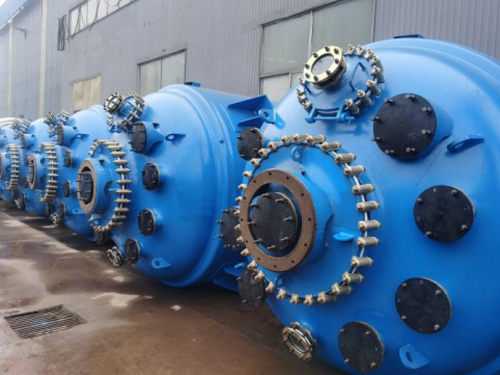
Troubleshooting Common Issues in Glass-Lined Reactors: Diagnosis and Remediation
Introduction
Even
with proper operation, Glass-Lined Steel (GLS) reactors may experience
issues. Prompt and correct diagnosis is key to minimizing downtime. This
guide categorizes common problems, their likely causes, and systematic
remedies.
Category 1: Glass Lining Failures
Symptom: Visible chipping, spalling, or exposed steel.
Likely Causes:
Actions:
STOP OPERATION IMMEDIATELY. Corrosion of the exposed steel will be rapid and will contaminate product.
Professional Repair: Contact a specialist. Small defects can be repaired in-place with high-performance polymer-composite patching kits (e.g., epoxy- or silicate-based). Larger areas may require field re-enameling.
Prevention: Enforce strict compliance with operating SOPs regarding temperature ramps and tool use.
Thermal shock from rapid heating/cooling.
Mechanical impact from tools or falling objects.
Chemical attack from a prohibited agent (e.g., alkali, fluoride).
Symptom: Loss of gloss, surface etching, or pinpoint defects.
Cause: Long-term, slow chemical attack from a process medium at the edge of the material's compatibility.
Action: Monitor the defect's progression. The reactor may be downgraded to a less aggressive service. Perform more frequent spark tests.
Category 2: Seal and Leakage Problems
Symptom: Leakage at the agitator shaft.
Cause: Packing wear or loose gland follower bolts.
Action: Tighten the gland follower evenly. If leakage persists, repack with the correct style and material of packing.
Cause: Worn seal faces, failed O-rings, or loss of buffer fluid pressure/cooling.
Action: Check buffer system pressure and heat exchanger. Isolate the vessel, depressure, and replace the seal cartridge or components.
For Mechanical Seals:
For Gland Packing:
Category 3: Agitation and Drive Issues
Symptom: High motor current, unusual noise, or seized agitator.
Causes:
Actions:
Do not force it. Manually bar-over the agitator if possible.
Inspect internals for obstructions or signs of contact.
Use solvents or thermal cycling (if safe) to dissolve solidified material. For mechanical issues, repair the drive train or realign internal components.
Bearing failure in the gearbox or bottom bearing.
Agitator blade contact with a baffle or thermowell (due to shaft deflection or misalignment).
Solidified or polymerized product locking the impeller.
Category 4: Loss of Heat Transfer Efficiency
Symptom: Slower than normal heating/cooling rates.
Causes:
Actions:
Chemically clean the jacket side with a descaling agent (e.g., inhibited acid).
Improve internal cleaning procedures. Soak with appropriate solvents.
Ensure jacket vent valves are open during filling to purge air.
Jacket Fouling: Scale buildup from cooling water (most common).
Product-Side Fouling: Polymerized or crystallized material on the glass surface acting as an insulator.
Air pocket in the jacket.
Proactive Maintenance Philosophy
Documentation: Maintain a log for each reactor noting all operations, repairs, and spark test results.
Preventive Schedule: Establish regular maintenance tasks: lubrication of gears, replacement of seal water filters, torque-checking of internal bolts.
Non-Destructive Testing (NDT): Conduct annual high-voltage spark testing to find otherwise invisible flaws.
Conclusion
Most
GLS reactor problems are preventable and manageable. A culture of
careful operation, combined with a structured approach to
troubleshooting and a proactive maintenance schedule, will maximize
equipment availability and lifespan. For complex failures, always rely
on the expertise of the original manufacturer or qualified specialists.