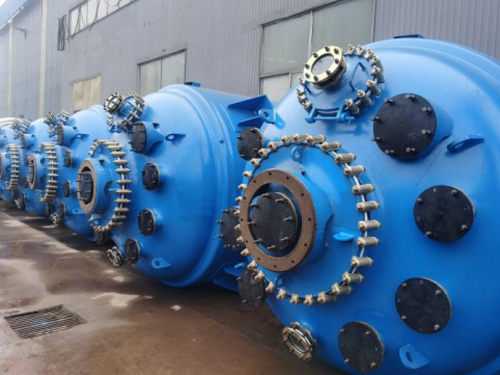
Core Advantages of Glass-Lined Reactors: Unmatched Corrosion Resistance and Zero Metallic Contamination
Introduction
In
the chemical process industries, equipment selection is often a
trade-off between durability, cost, and compatibility. Glass-Lined Steel
(GLS) reactors stand out by offering two synergistic, fundamental
advantages that are difficult to replicate with alternative materials: near-universal corrosion resistance and a guarantee of zero metallic contamination.
Advantage 1: Unmatched Corrosion Resistance
The corrosion resistance stems from the borosilicate glass enamel itself, which is typically >65% silicon dioxide (SiO₂).
Mechanism: The dense, amorphous SiO₂ network is highly inert to proton (H⁺) attack, making it exceptionally resistant to mineral acids (hydrochloric, sulfuric, nitric) at almost all concentrations and temperatures up to 200°C. It also withstands most organic acids and solvents.
The "Achilles' Heel": This resistance has clear limits. GLS is severely attacked by hydrofluoric acid (HF) and hot concentrated phosphoric acid, which dissolve the silica matrix. Strong alkalis, especially at elevated temperatures, can also slowly attack the glass over time. Thermal shock from rapid temperature changes (>120°C differential) can cause mechanical cracking.
Comparative Benefit: Unlike alloy reactors (e.g., Hastelloy, tantalum) which are optimized for specific corrosives, GLS provides a broad-spectrum, cost-effective defense against a wide range of acids, simplifying material selection for multi-purpose plants.
Advantage 2: Absolute Barrier to Metallic Contamination
For
industries like pharmaceuticals, fine chemicals, and food processing,
even trace metals (Fe, Cr, Ni, Mo) can catalyze unwanted side reactions,
degrade product color, or introduce toxic impurities.
Perfect Isolation: A fully intact glass lining creates a 100% physical barrier between the process fluid and the underlying carbon steel shell. No ions can migrate from the vessel wall into the product.
Surface Characteristics: The fired glass surface is hygienically smooth, non-porous, and chemically clean. It does not catalyze reactions or release any substances, preserving the chemical integrity of the process.
Quality Assurance: This guarantee is underpinned by rigorous manufacturing quality control, specifically high-voltage spark testing, which detects any microscopic pinholes in the enamel layer that could compromise this barrier.
Synergistic Value Proposition
These advantages address the two most critical pain points in corrosive chemical processing: equipment lifetime and product quality.
For plant managers, it means extended run times, lower maintenance costs, and higher batch success rates.
For process chemists, it enables the use of aggressive reagents without fear of vessel degradation or product adulteration.
Conclusion
The dual promise of extreme corrosion resistance and metallic purity
is the foundational value of GLS reactors. While not universal, their
performance in acidic and high-purity environments remains unmatched by
most metallic alternatives, justifying their continued, vital role in
chemical manufacturing.